



Care symbols are a compact safety language for textiles. They tell the owner and professional cleaner the maximum treatment the complete article is designed to withstand. The symbols should be read together, because washing, bleaching, drying, ironing and professional cleaning are separate decisions. This guide answers the question directly and then explains how to apply the instruction without damaging the product.
Related guidance for the next decision
Where professional treatment is permitted, the P symbol for professional dry cleaning becomes relevant. The broader wash-symbol temperature and process guide explains the remaining stages, and brands can specify Soabar textile labels designed for repeated laundering.
The crossed wash tub is an absolute prohibition
A wash tub with a diagonal cross means the article must not be washed in water. It is not a recommendation for a colder cycle, a delicate programme or hand washing. Water, detergent or agitation may cause distortion, colour loss, shrinkage, delamination or damage to structural components.
Cleaning after a spill
Do not immerse the item or improvise a spot treatment without checking the remaining instructions. Blotting may be safer than rubbing, but even local moisture can create rings or colour movement. A professional cleaner should see the label and know what caused the stain before treatment begins.

The five care processes
A complete textile care instruction normally follows a fixed order: washing, bleaching, drying, ironing and professional textile care. The wash tub covers wet washing; the triangle covers bleaching; the square covers drying; the iron covers ironing; and a circle covers professional cleaning. Reading the whole sequence matters because a garment may tolerate a mild wash but not tumble drying, or may permit ironing only at a low temperature.
How modifiers change the instruction
Numbers inside the wash tub show the maximum wash temperature in degrees Celsius. One or two bars underneath a symbol call for a milder or very mild process, usually involving reduced mechanical action. Dots commonly indicate heat level. A diagonal cross means the treatment is not permitted. A hand in the wash tub means hand washing. These modifiers are not decorative: they define the safe upper limit of treatment.


Maximum treatment, not a compulsory setting
A care symbol identifies the strongest treatment considered safe for the complete article, including fabric, colour, finish, stitching, buttons, zips, prints and embellishments. A gentler treatment is normally acceptable. For example, a 40°C wash symbol does not force the user to wash at 40°C; it means the temperature should not exceed that limit while the stated process severity is respected.
Why the complete garment matters
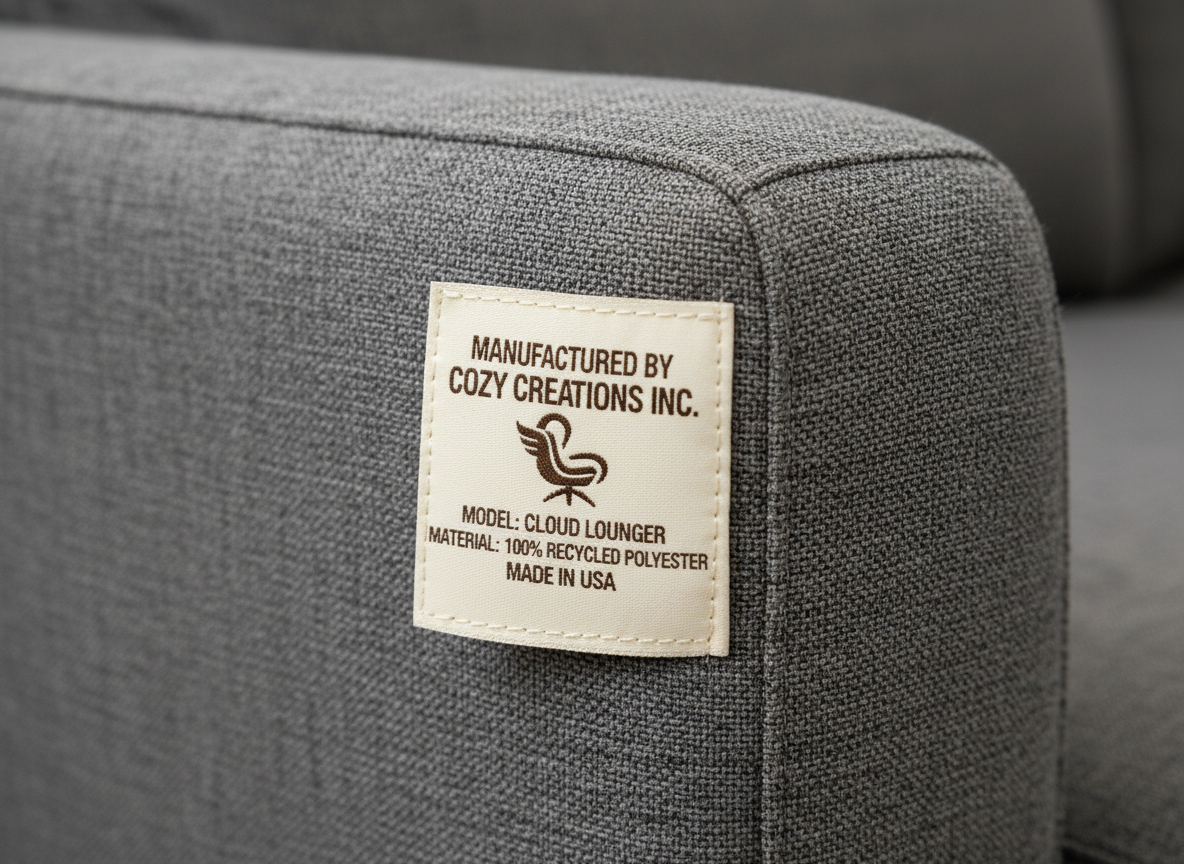
Care instructions should be based on the most sensitive component of the finished product. A robust cotton fabric can still require delicate treatment if it contains a bonded print, unstable dye, coated surface, structured lining or heat-sensitive trim. This is why guessing from fibre content alone is unreliable and why durable, legible textile labels remain important throughout the useful life of a garment.
Common mistakes to avoid
Do not rely on fabric feel, garment price or a remembered symbol from another item. Do not treat a cross as a suggestion, and do not ignore bars beneath a symbol. Avoid cutting out a care label before recording its information. When several pieces form one product, check whether each part has its own instruction. If a symbol is illegible, choose the least aggressive reasonable treatment rather than experimenting.
Care information for clothing businesses
Brands need a label that remains comfortable, attached and readable after repeated use. Soabar’s textile labels can be produced for wash-care information, fibre composition, sizing and variable product data. Businesses that need on-demand changes can also review the T4+ textile label printer, which supports changing care symbols, compositions, style codes and sizes.
Producing a clear care label
Give the label supplier approved artwork or verified care data, finished label dimensions, material preference, print colour, fold or cut format, expected wash exposure and sewing method. Leave adequate clear space around each symbol. Proof at actual size, because an icon that looks clear on a large monitor can become ambiguous when reduced. Confirm that written instructions agree with the symbols.
When to ask for specialist help
Ask the garment technologist or manufacturer when safe treatment is uncertain. Ask a professional cleaner when a high-value, structured or stained item has restrictive instructions. For label construction, print durability or an in-house printing setup, use Soabar’s contact page to discuss the application rather than selecting only by appearance.
Detergent, load and preparation still matter
Correctly reading the prohibition on washing in water does not remove the need for sensible preparation. Sort by colour and care requirement, close fastenings, empty pockets and protect delicate surfaces. Use a detergent appropriate to the article and avoid overloading the machine, because restricted movement can reduce rinsing while excessive friction can damage surfaces. Written instructions such as “wash inside out” or “wash separately” add product-specific detail and should be followed alongside the symbols.
What bars and dots do not tell you
The modifiers within the prohibition on washing in water set process severity or heat, but they do not identify a universal programme name. Appliance manufacturers label cycles differently, and a programme can change duration, water level, spin and mechanical action. The owner should use the appliance manual to find a cycle that stays within the care limit. A familiar cycle name is not evidence that it matches every garment carrying a similar temperature mark.
Treat stains before they set—carefully
Prompt treatment can help, but the care label still limits what may be done. Identify the stain and check colourfastness before using a specialist product. Avoid rubbing delicate surfaces or applying bleach simply because the base fabric is pale. If the article prohibits washing or requires professional care, tell the cleaner what caused the stain and whether any home treatment has already been attempted.
After washing or cleaning
Reshape garments when the instructions and construction call for it, and use the permitted drying method. Do not assume air drying is automatically harmless: hanging can stretch heavy knitwear, direct heat can affect coatings, and sunlight can alter colour. Once dry, follow the ironing symbol rather than guessing from fibre content. Store only when fully dry to reduce odour, mildew and shape problems.
If the label and retailer advice conflict
Keep evidence of the product page, packaging and care label, but prioritise safety while seeking clarification. A brand should investigate contradictory instructions promptly because customers need one unambiguous maximum treatment. Product teams should correct the master specification and prevent conflicting artwork from being reused across colourways, factories or repeat orders.

Label durability is part of usability
A correct symbol that disappears after a few washes no longer serves its purpose. Print method, ribbon, textile substrate, cutting, folding, sewing allowance and attachment all affect durability and comfort. The label should remain legible without creating an irritating edge that encourages removal. Testing should reproduce the declared care process repeatedly and examine print, fraying, dimensional change and attachment strength.
Build the decision around evidence
Good label decisions are documented rather than assumed. Record the product specification, approved artwork, samples, test conditions and sign-off. Where the content carries safety, care, traceability or regulatory information, include an independent check by someone who did not prepare the original file. This simple separation catches familiar wording, transposed values and outdated versions that the original author may overlook. Evidence also makes later troubleshooting faster because the team can distinguish a design decision from an uncontrolled production change.
Manage changes before the next order
Products, ingredients, suppliers, containers, machinery and legal requirements can change during the life of a label. Set a review trigger for each relevant change rather than reordering automatically from the previous file. Confirm that material, adhesive, dimensions, wording, codes, orientation and quantities are still correct. Withdraw obsolete artwork and identify superseded label stock so it cannot return to the packing line. Repeat orders should be convenient, but convenience should never bypass content approval or application checks.
Work with the supplier early
Early discussion gives the label supplier room to solve constraints through material choice, artwork adjustment, finishing, roll format or printing method. Sending finished artwork only after every decision has been locked can hide avoidable problems. Share non-negotiable requirements and explain the production process, then allow suitable alternatives to be sampled. The strongest result combines the product owner’s knowledge of the item and customer with the supplier’s knowledge of print, materials, converting and equipment.
A practical specification checklist
Before ordering or acting, record the intended use, the product or garment construction, environmental exposure, required lifetime, critical information, production method and any equipment constraints. Confirm the final artwork at actual size and test a representative sample. Keep the approved specification and sample with the job record so repeat production is based on evidence rather than memory.
Frequently Asked Questions

Let’s Talk Labels
Need the perfect label, printer, or software for your business? Our team is ready to help you choose the right solution, answer your questions, and provide a personalised quote. Let’s make labelling easy.